The mould you couldn't see on paper.
A modern home with nothing visible on the walls — until a DNA dust test graded it F. Independent air testing then confirmed a post-treatment result well below the outdoor baseline.
"As far as I'm aware, everything's really good — everybody was very helpful and pleasant."
Not a hunch evidence.
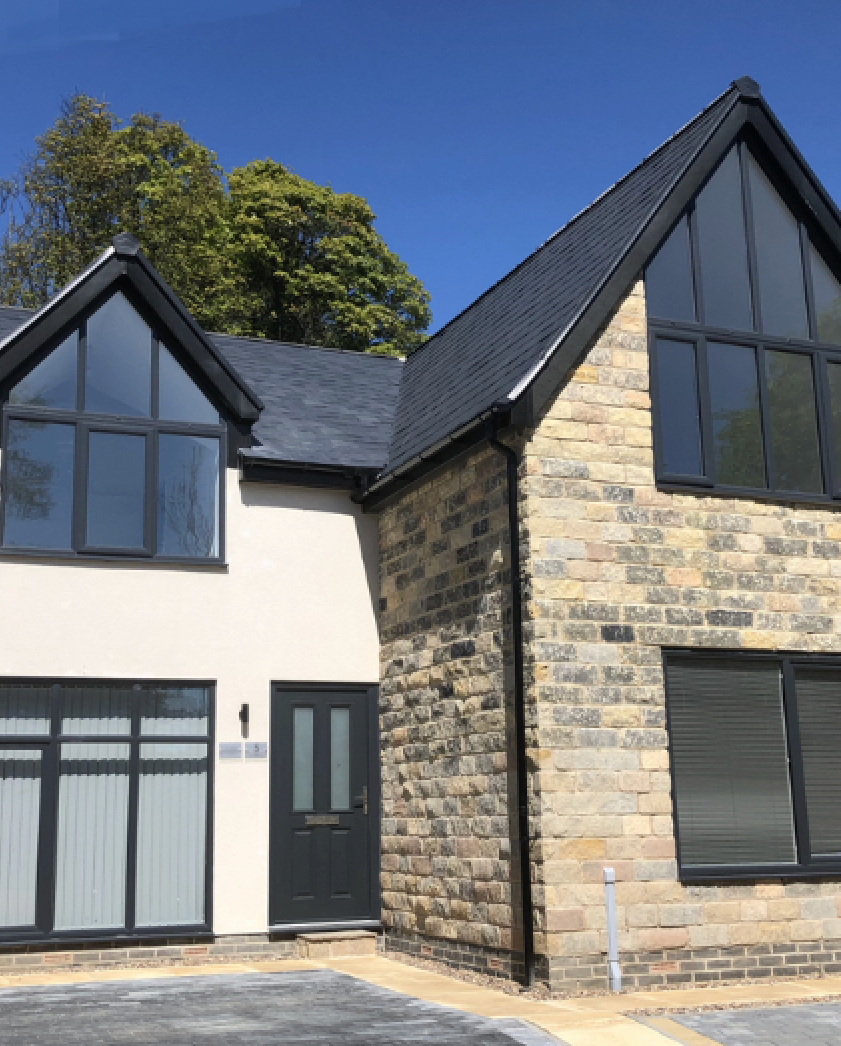
The home was modern and brick-built — the kind of property most people assume can't have a mould problem. Nothing was visible anywhere.
There's a particular doubt in suspecting something you can't prove. The home looked spotless — but past water events left a question that decorating over would never answer.
So rather than guess, the owner tested. A DNA dust swab came back Grade F — very high — enough to book a full survey.
Mould is airborne, and you only ever see a fraction of it. A modern, well-ventilated home is no guarantee — leaks can feed growth out of sight.
"For me, I want to see the evidence."
The survey traced the moisture to real sources. Tellingly, no indoor-growth marker moulds showed in the air, yet the dust test graded F — proof that airborne counts and hidden growth are different questions.
Bath water repeatedly escaping through gaps between the floorboards, pooling in the void and tracking onto the living-room ceiling below.
A slow leak from the downstairs WC cistern inlet, tracking down and trapping moisture beneath the vinyl flooring.
Suspected moisture ingress around the false chimney stack, with tightly packed loft insulation restricting airflow.
After treatment, the living-room airborne mould-spore count was ≈5.9× lower than the outdoor reference sample taken that day — 2,300 down to 320 per m³, an ≈86% fall from a level that had started above the baseline.
"You really came up with the goods, and we really appreciated it."
The process behind the transformation.
Four stages. One day on site. Independent lab evidence at both ends — before you spend, and after we leave.
Comprehensive survey and independent laboratory testing to identify the root cause — not just the visible symptoms.
Patented two-step dry-fog process, applied throughout the property to reach every surface the air touches and reduce mould contamination, then an antimicrobial film to inhibit regrowth.
Post-treatment lab testing gives written, independent evidence of the spore-count reduction. No claims without numbers.
A follow-up in the weeks after treatment confirms the result has held — clear air, no regrowth, and the evidence to prove it.
What a homeowner actually wants to know.
Mould is airborne — you only ever see a fraction of it. Here, a spotless-looking modern home returned a DNA dust grade of F (very high) and indoor spore levels above the outdoor air, verified by Eurofins.
It replaces guesswork with evidence. Instead of decorating over a suspicion, the survey and lab tests pinpointed the moisture sources and gave a documented before-and-after — 2,300 down to 320 spores per m³.
This job ran over two visits — a survey day, then the treatment day with same-day lab testing. Everyone and any pets leave while the dry fog is active: out for the day, back that evening, with no demolition.
The dry fog stays airborne long enough to reach every surface the air touches — loft voids, ceiling cavities, air ducts — oxidising and denaturing mould and bringing spore levels down to outdoor-equivalent, in one pass.
If you think you have a problem with mould, start with a survey.
Diagnostic moisture & mould survey. Independent US-tested treatment. Lab-verified results. 12-month limited retreatment warranty (T&Cs apply).
A diagnostic visit to identify exactly what's happening — before you spend anything on treatment.
Subject to availability and survey findings, urgent cases may be booked within 24 hours — most homes treated in a single day.
See how dry-fog works and why independent lab testing matters.